


Ik blijf thuis omdat ik ziek ben.
English: I stay at home because I am sick.
Grammar page
Dutch B1 grammar page for hoofdzin en bijzin combineren, with rule summary, examples, and SmartWords practice context.
In Dutch, you can combine a main clause (hoofdzin) and a subordinate clause (bijzin) to make more complex sentences. The main clause can stand alone, but the subordinate clause depends on it.
You use this structure to connect two ideas, explain reasons, give conditions, or add extra information in Dutch sentences.
Ik blijf thuis omdat ik ziek ben.
English: I stay at home because I am sick.
Als het regent, neem ik een paraplu mee.
English: If it rains, I take an umbrella.
Ze belt mij wanneer ze tijd heeft.
English: She calls me when she has time.
Omdat hij hard werkt, krijgt hij goede cijfers.
English: Because he works hard, he gets good grades.
Lisa wil haar webcam gebruiken.
Answer: Lisa wil haar webcam gebruiken omdat ze online wil chatten.
‘omdat’ geeft een reden aan, het werkwoord staat achteraan in de bijzin.
Today's hand-picked vocabulary, grammar, and pronunciation page for Dutch. Bookmark this section — it refreshes every day.
Subscribe to SmartWords daily picks. Choose the topics you want — we send one short email per day.
Six word games built around our real vocabulary — free in the browser, no install.
Open the game hub →
Match the center word under time pressure and keep the combo alive.
Play now →
Fly through the correct gate before the speed ramps up.
Play now →
Slice the goal-language words, avoid the main-language decoy, and chase the announced bonus target.
Play now →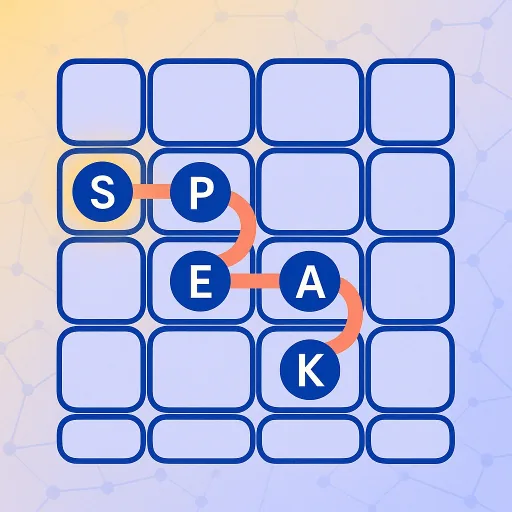
Trace a single path across the board, hit each letter anchor in order, and fill every open cell.
Play now →
Pick the word that doesn't belong from a topic-driven set — every tap reveals all four meanings and images so the round becomes a flash-card too.
Play now →
Flip and match goal-language words to their main-language meaning before your lives run out.
Play now →