


Ich spreche mit dem netten Mann.
English: I speak with the nice man.
Grammar page
German A2 grammar page for adjektivdeklination im dativ, with rule summary, examples, and SmartWords practice context.
Adjective declension in the dative case means changing the ending of an adjective when it describes a noun that is in the dative case in German. The ending depends on the gender, number, and article before the noun.
Use adjective declension in the dative case when you describe something (with an adjective) that is the indirect object in the sentence, usually after prepositions like 'mit', 'bei', 'nach', 'zu', 'aus', 'von', 'seit'.
Ich spreche mit dem netten Mann.
English: I speak with the nice man.
Sie geht mit der freundlichen Frau.
English: She goes with the friendly woman.
Wir spielen mit dem kleinen Kind.
English: We play with the small child.
Ich fahre mit den alten Freunden.
English: I travel with the old friends.
Ich helfe meinem Freund mit dem ___ Gürtel.
Answer: goldenem
'Gürtel' ist maskulin und steht im Dativ mit 'dem', daher endet das Adjektiv auf -em: 'goldenem Gürtel'.
Today's hand-picked vocabulary, grammar, and pronunciation page for German. Bookmark this section — it refreshes every day.
Subscribe to SmartWords daily picks. Choose the topics you want — we send one short email per day.
Six word games built around our real vocabulary — free in the browser, no install.
Open the game hub →
Match the center word under time pressure and keep the combo alive.
Play now →
Fly through the correct gate before the speed ramps up.
Play now →
Slice the goal-language words, avoid the main-language decoy, and chase the announced bonus target.
Play now →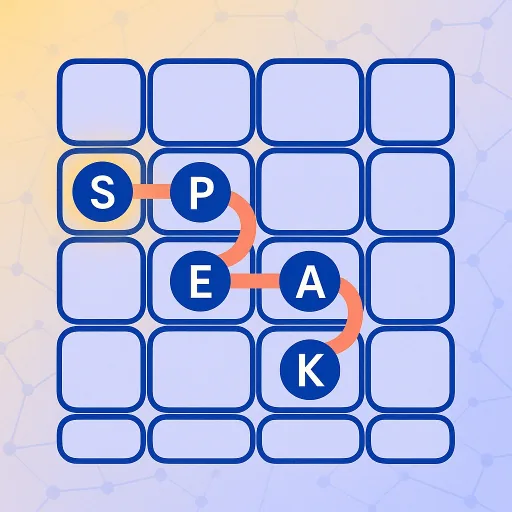
Trace a single path across the board, hit each letter anchor in order, and fill every open cell.
Play now →
Pick the word that doesn't belong from a topic-driven set — every tap reveals all four meanings and images so the round becomes a flash-card too.
Play now →
Flip and match goal-language words to their main-language meaning before your lives run out.
Play now →