


Das ist der Mann, der im Park joggt.
English: That is the man who jogs in the park.
Grammar page
German B1 grammar page for relativsätze (mit relativpronomen), with rule summary, examples, and SmartWords practice context.
A relative clause (Relativsatz) in German is a part of a sentence that gives more information about a noun. It uses a special pronoun (Relativpronomen) like 'der', 'die', 'das', etc.
Use German relative clauses to add extra information about a person, thing, or idea mentioned in the main sentence, often to describe or specify which one you mean.
Das ist der Mann, der im Park joggt.
English: That is the man who jogs in the park.
Ich habe ein Buch, das sehr spannend ist.
English: I have a book that is very exciting.
Kennst du die Frau, die dort steht?
English: Do you know the woman who is standing there?
Das ist das Auto, das ich kaufen möchte.
English: That is the car that I want to buy.
Hier sind die Kinder, denen ich helfe.
English: Here are the children whom I help.
Today's hand-picked vocabulary, grammar, and pronunciation page for German. Bookmark this section — it refreshes every day.
Subscribe to SmartWords daily picks. Choose the topics you want — we send one short email per day.
Six word games built around our real vocabulary — free in the browser, no install.
Open the game hub →
Match the center word under time pressure and keep the combo alive.
Play now →
Fly through the correct gate before the speed ramps up.
Play now →
Slice the goal-language words, avoid the main-language decoy, and chase the announced bonus target.
Play now →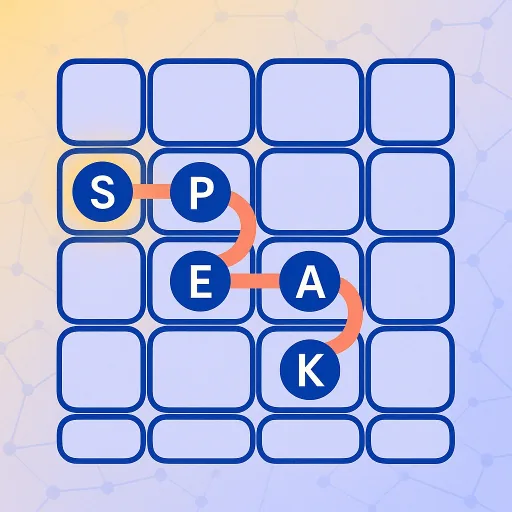
Trace a single path across the board, hit each letter anchor in order, and fill every open cell.
Play now →
Pick the word that doesn't belong from a topic-driven set — every tap reveals all four meanings and images so the round becomes a flash-card too.
Play now →
Flip and match goal-language words to their main-language meaning before your lives run out.
Play now →