


¿Hay alguien en la casa?
English: Is there someone in the house?
Grammar page
Spanish B1 grammar page for pronombres indefinidos, with rule summary, examples, and SmartWords practice context.
Indefinite pronouns in Spanish are words used to refer to people or things in a non-specific way, like 'someone', 'something', or 'nobody'. They help you talk about things or people without saying exactly who or what.
Use indefinite pronouns in Spanish when you want to talk about people or things in a general or unknown way. For example, when you don't know who did something, or when you mean 'some', 'any', 'none', or 'nothing'.
¿Hay alguien en la casa?
English: Is there someone in the house?
No quiero nada.
English: I don't want anything.
Nadie sabe la respuesta.
English: Nobody knows the answer.
¿Tienes algún libro interesante?
English: Do you have any interesting book?
No veo ninguno.
English: I don't see any.
María busca su jersey azul. Ella pregunta: ¿Ha visto ___ mi jersey azul?
Answer: alguien
‘Alguien’ se usa para referirse a una persona desconocida que podría haber visto el jersey.
Today's hand-picked vocabulary, grammar, and pronunciation page for Spanish. Bookmark this section — it refreshes every day.
Subscribe to SmartWords daily picks. Choose the topics you want — we send one short email per day.
Six word games built around our real vocabulary — free in the browser, no install.
Open the game hub →
Match the center word under time pressure and keep the combo alive.
Play now →
Fly through the correct gate before the speed ramps up.
Play now →
Slice the goal-language words, avoid the main-language decoy, and chase the announced bonus target.
Play now →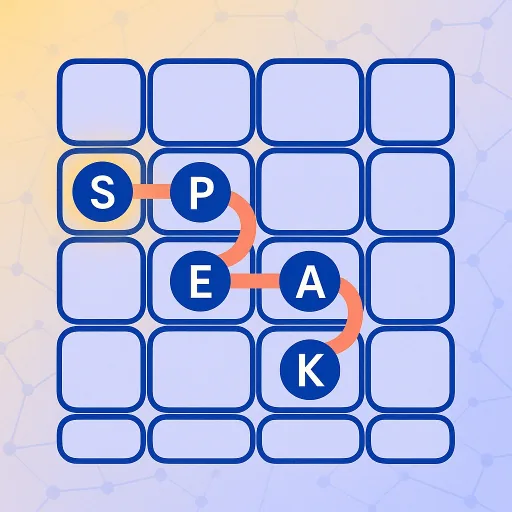
Trace a single path across the board, hit each letter anchor in order, and fill every open cell.
Play now →
Pick the word that doesn't belong from a topic-driven set — every tap reveals all four meanings and images so the round becomes a flash-card too.
Play now →
Flip and match goal-language words to their main-language meaning before your lives run out.
Play now →