


Mi casa es grande.
English: My house is big.
Grammar page
Spanish A2 grammar page for adjetivos posesivos, with rule summary, examples, and SmartWords practice context.
Possessive adjectives in Spanish are words used before a noun to show who owns or has something. They answer the question: Whose is it?
Use possessive adjectives in Spanish when you want to say that something belongs to someone. They go before the noun and must agree in number (singular/plural), and sometimes in gender, with the noun.
Mi casa es grande.
English: My house is big.
Tus libros están en la mesa.
English: Your books are on the table.
Su hermano vive en Madrid.
English: His/her/their/your (formal) brother lives in Madrid.
Nuestros amigos llegan mañana.
English: Our friends arrive tomorrow.
Vuestras ideas son interesantes.
English: Your (plural, informal) ideas are interesting.
Ana tiene un vestido verde.
Answer: Su vestido
'Su' es el adjetivo posesivo para 'ella' o 'él' en español.
Today's hand-picked vocabulary, grammar, and pronunciation page for Spanish. Bookmark this section — it refreshes every day.
Subscribe to SmartWords daily picks. Choose the topics you want — we send one short email per day.
Six word games built around our real vocabulary — free in the browser, no install.
Open the game hub →
Match the center word under time pressure and keep the combo alive.
Play now →
Fly through the correct gate before the speed ramps up.
Play now →
Slice the goal-language words, avoid the main-language decoy, and chase the announced bonus target.
Play now →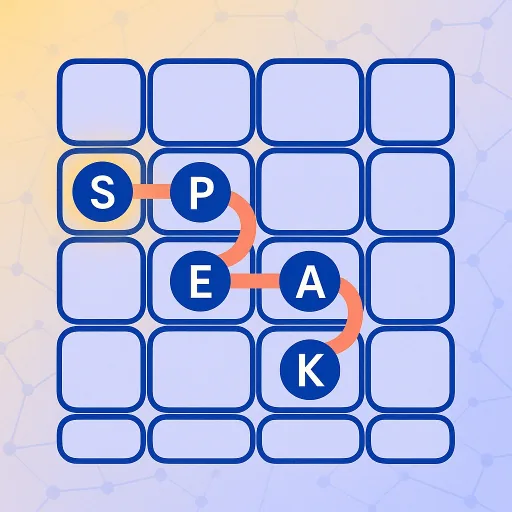
Trace a single path across the board, hit each letter anchor in order, and fill every open cell.
Play now →
Pick the word that doesn't belong from a topic-driven set — every tap reveals all four meanings and images so the round becomes a flash-card too.
Play now →
Flip and match goal-language words to their main-language meaning before your lives run out.
Play now →