


I went home because I was tired.
- Language
- English
- Level
- B2
- Unit
- Complex Sentences and Linking
- Practice types
- 4
What this grammar point covers
An adverbial clause is a group of words with a subject and verb that acts like an adverb in a sentence. It gives more information about when, why, how, or under what condition something happens.
When to use it
Use adverbial clauses to give extra information about actions. They explain time, reason, condition, contrast, or manner in a sentence.
Key forms
- Subordinating conjunction + subject + verb (e.g., because she was tired, although it was raining)
- Common conjunctions: because, although, if, when, after, before, since, while, unless
Examples
If it rains, we will stay inside.
She smiled although she was sad.
Call me when you arrive.
Tips
- Remember to use a comma when the adverbial clause comes at the beginning of the sentence.
- The adverbial clause cannot stand alone; it needs a main clause.
- Choose the correct conjunction to show the right meaning (time, reason, contrast, etc.).
Exceptions and edge cases
- Sometimes, the subject can be omitted in adverbial clauses of time if it is the same as the main clause.
- Some adverbial clauses can be reduced by removing the subject and using the -ing form.
Sample exercise
He insisted on integrating new technology, even though it might exceed the budget.
Answer: even though
'Even though' introduces a contrast, showing he insisted despite the possible problem.
Word of the Day
Today's hand-picked vocabulary, grammar, and pronunciation page for English. Bookmark this section — it refreshes every day.
Get one new word every morning
Subscribe to SmartWords daily picks. Choose the topics you want — we send one short email per day.
Keep exploring
Play SmartWords games
Six word games built around our real vocabulary — free in the browser, no install.
Open the game hub →-

Word Sling
Match the center word under time pressure and keep the combo alive.
Play now → -

Word Gate
Fly through the correct gate before the speed ramps up.
Play now → -

Word Ninja
Slice the goal-language words, avoid the main-language decoy, and chase the announced bonus target.
Play now → -
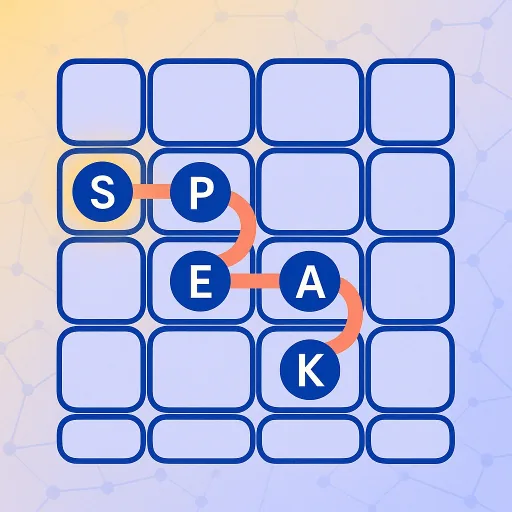
Word Zip
Trace a single path across the board, hit each letter anchor in order, and fill every open cell.
Play now → -

Word Oddity
Pick the word that doesn't belong from a topic-driven set — every tap reveals all four meanings and images so the round becomes a flash-card too.
Play now → -

Word Memory
Flip and match goal-language words to their main-language meaning before your lives run out.
Play now →