


The word certificate can mean several things in language learning. It can refer to a government exam, an admissions requirement, a record from a course provider, or a milestone inside a learning product. Those documents are not interchangeable.
A SmartWords certificate is a verifiable record of a defined achievement inside SmartWords. It is designed to communicate more than a celebratory badge, while staying precise about what was assessed. It does not claim to replace an official immigration, university-admissions, or professional-licensing exam.
Here is what to look for when you earn, receive, or verify one.
Read the achievement, not just the level
A CEFR label such as A1 or B2 is useful, but it is not the entire description. Real language ability is often uneven. Someone may read at B1 while still speaking at A2, or understand careful speech more confidently than they can write.
SmartWords therefore issues eligible proficiency certificates for specific skills and levels. The certificate identifies the assessed area, such as reading, listening, speaking, writing, grammar, or pronunciation, together with the goal language and CEFR level. A skill-specific result is more honest than turning one strong score into a claim about every part of the language.
The Achievements area also includes progress-based milestones, such as lesson mastery and consistency. These recognise sustained work or course completion rather than proficiency in one assessed skill. The title and wording tell you which kind of achievement you are viewing.
That distinction matters. A reading-proficiency certificate and a lesson-mastery certificate can both represent meaningful work, but they answer different questions.
What an assessment certificate records
An eligible SmartWords skill certificate shows that the named learner met the required result in the stated SmartWords assessment. The document includes the skill, CEFR level, language, issue information, issuer, and a public certificate identifier.
SmartWords level-test passes use an 80% threshold. The assessment is tied to the skill named on the certificate; it should not be read as a pass across skills that were not tested. SmartWords' short public placement test is different: it provides a quick level estimate and does not award a certificate.
In other words, the accurate reading is specific: “This learner passed the SmartWords A2 listening assessment in Spanish,” not “This learner has an official A2 qualification in all Spanish skills.” Precision makes the record more useful, not less.
What public verification adds
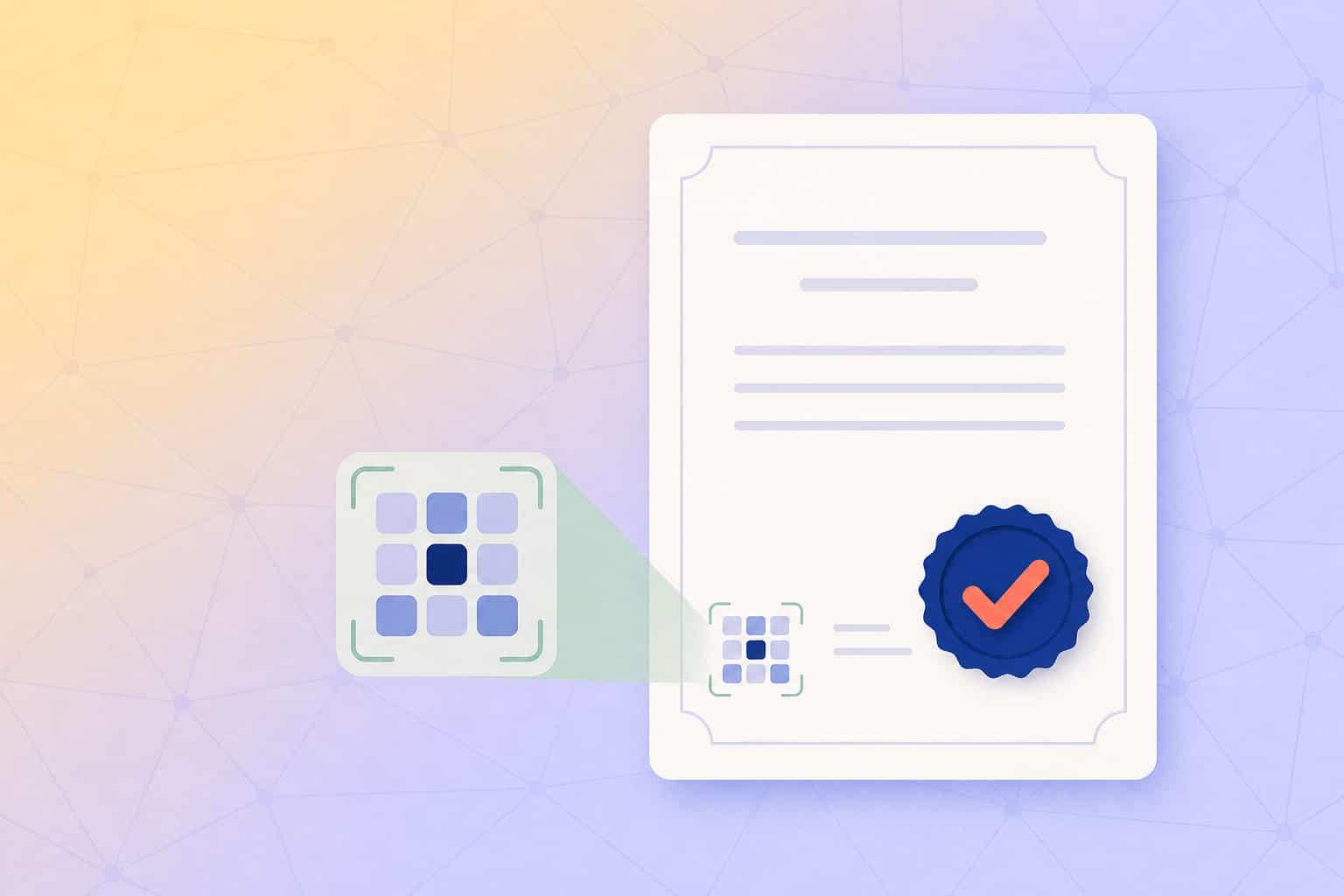
A downloaded image can be copied, edited, or separated from its source. SmartWords certificates therefore include a QR code and verification address linked to a public certificate ID. The public ID is not the learner's private account ID.
Opening that address loads the matching certificate record and renders the certificate through the SmartWords verification page. A person checking it can compare the displayed name, achievement, language, level, date, and issuer with the document they received. A certificate that has been removed no longer keeps an active verification record.
This does not turn SmartWords into an external examination authority. It answers a narrower and important question: does this certificate correspond to a public record issued through SmartWords, rather than being an unattached image?
The verification page can display certificate text in the visitor's current site language. The achievement itself does not change when the display language changes.
Who issues the certificate
Most certificates use SmartWords as the issuer. Some learners study through an organisation that is authorised to certify within SmartWords. In that case, an eligible certificate can carry the organisation's name and branding instead.
The issuer shown on the certificate and verification page is therefore part of what should be checked. A SmartWords-issued record and an organisation-issued record both use the verification system, but you should read the issuer exactly as displayed rather than assuming who stands behind it.
Why the certificate is skill-specific
Broad labels are convenient for profiles and CVs, but they can hide the work a learner still needs to do. Skill-specific certificates make a jagged learning profile visible.
That can help in three ways:
- A learner can celebrate a genuine strength without pretending the whole level is complete.
- The next goal becomes clearer. A B1 reading result may sit beside an A2 speaking goal.
- A teacher, coach, or employer can see what SmartWords actually assessed rather than guessing from a generic “course completed” line.
For a formal application, always check the recipient's rules. A university, employer, municipality, or immigration authority may require a named external examination and may not accept a course-provider certificate. SmartWords verification confirms the SmartWords record; it does not override another institution's requirements.
Sharing and presenting a certificate
Earned certificates are available in the Profile's Achievements area. You can preview them, choose from square, landscape, and portrait aspect ratios, and export them as an image or PDF. Supported devices also offer sharing and clipboard options.
Before sharing, set the certificate display name you want to use. SmartWords reviews name changes to allow corrections and additional names while protecting the credibility of the record. You can also choose the certificate language separately from the app interface language.
The best caption is as specific as the certificate. For example: “I passed the SmartWords B1 reading assessment in Dutch” is clearer than “I am B1 in Dutch.” If the document marks lesson mastery or consistency, name that milestone directly.
A practical verification checklist
If someone sends you a SmartWords certificate, take a minute to check it:
- Open the QR code or verification URL rather than relying on the attachment alone.
- Confirm that the public page loads a matching certificate.
- Compare the learner name, language, skill or milestone, CEFR level where applicable, issue date, and issuer.
- Interpret the scope literally. A speaking result proves a speaking assessment result; a lesson milestone records lesson progress.
- For regulated or formal use, confirm the receiving organisation's own evidence requirements.
This is the balance SmartWords certificates aim for: an achievement worth keeping and sharing, a public route for checking it, and wording that does not stretch beyond what the learner completed.
Open a public sample certificate to see the layout and verification experience before you earn your own.